
A new way to guide CRISPR toward RNA.
DNA-guided CRISPR–Cas12 for cellular RNA targeting
Nature Biotechnology · May 15, 2026CRISPR is best known for rewriting DNA. But changing how a cell behaves does not always require altering its genetic code. In our study published in Nature Biotechnology, we introduce ΨDNA, synthetic DNA guides that redirect CRISPR–Cas12 toward RNA, the molecular messages cells use to make proteins. DNA guides offer practical advantages over RNA guides: greater chemical stability, simpler manufacturing and straightforward chemical modification. These properties could make them particularly well suited to whole-organ dosing, where producing sufficient material and maintaining its stability during delivery are essential. In human cell lines, our platform achieved up to 95% RNA knockdown, suppressed multiple targets at once, and combined DNA editing with RNA suppression using a single Cas12 enzyme. For CasNx, this work provides a scientific foundation for engineering donor organs before transplantation, with tools that could combine lasting genetic changes and temporary control of gene activity.
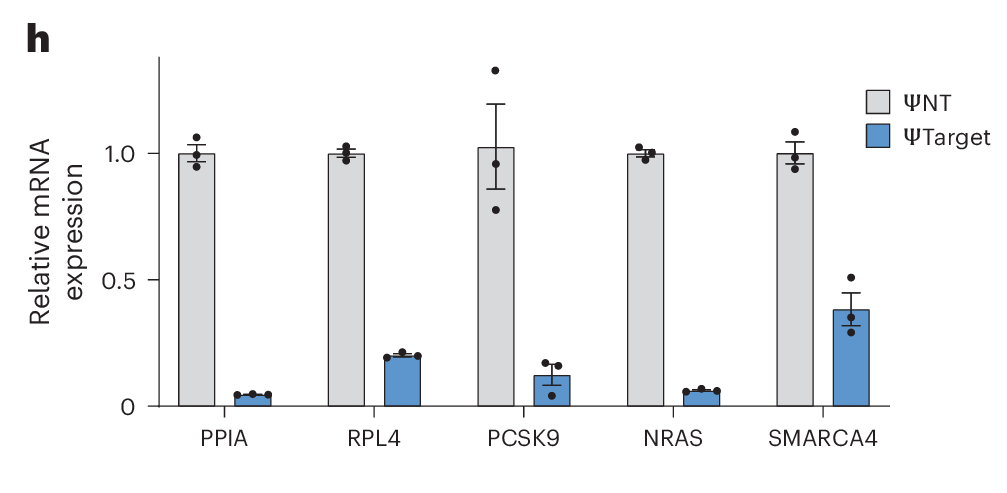
Fig. 3h · Orosco et al., Nature Biotechnology (2026). n = 3 biological replicates; RT–qPCR; mean ± SEM.
View figure & legendTurning organ preservation into an opportunity for repair.
Between donation and transplantation, an organ briefly becomes accessible in a way it never is inside the body. Machine perfusion circulates fluid through its blood vessels, creating a window to deliver treatments directly to the tissue. In our perspective published in Nature Reviews Bioengineering, we explore how CRISPR could turn this window into an opportunity to change the organ’s biology, silencing genes involved in injury or targeting viruses that could threaten the recipient after transplantation. Treating an organ outside the body offers an unusual advantage: therapy can be delivered to a single organ under controlled conditions before it reaches the patient. Building on our early RNA-silencing results in human kidney biopsies, the article maps the challenges of translating this approach to whole organs. For CasNx, the goal is to make this brief period count: improving the quality of donated organs and potentially making more of them suitable for transplantation.